

A single dose of creatine improved cognitive performance in sleep-deprived adults within six hours.
Not a week of supplementation. Not a month of loading. One dose, measured against a placebo, with statistically significant improvements in complex cognitive tasks. That finding comes from a 2024 study by Gordji-Nejad and colleagues, published in Scientific Reports. If it were a pharmaceutical result, it would be on the front page. Because it is a supplement that costs pennies per day, it barely made the health sections.
Creatine's reputation as a muscle supplement has been so dominant for so long that the research into its role in the brain has been easy to overlook. The last five years of research have changed the picture. We now have 16 randomised controlled trials, a comprehensive meta-analysis, and a growing body of mechanistic evidence pointing the same way: creatine appears to matter to the brain, not just to muscle.
Here is what the research actually shows, with the numbers, the caveats, and what it means for you.
THE BLIND SPOT IN SUPPLEMENT SCIENCE
For decades, creatine research focused almost exclusively on skeletal muscle. Fair enough. That is where roughly 95% of your body's creatine is stored. The early studies in the 1990s and 2000s were designed to measure sprint performance, bench press strength, and lean body mass. They were not looking at the brain because nobody thought to look.
The 5% of creatine stored outside muscle tissue was treated as a footnote. A biochemical curiosity. The brain, kidneys, and liver all contain creatine, but the research funding followed the athletes, not the neurons.
This created a blind spot. For twenty years, we accumulated overwhelming evidence that creatine improves cellular energy production via the phosphocreatine to ATP system. We assumed, without testing, that this effect was only relevant to muscle tissue.
The assumption was wrong. Your brain is the single most energy-hungry organ in your body. At roughly 2% of your total body weight, it consumes around 20% of your resting metabolic energy. Every thought, every memory consolidation, every decision, every word you read right now is powered by ATP. ATP regeneration in neural tissue follows the exact same phosphocreatine pathway as ATP regeneration in muscle.
If creatine tops up phosphocreatine in your quadriceps, why would it not do the same in your prefrontal cortex?
It took the research community a surprisingly long time to ask that question seriously. When they did, the answers came quickly.
THE XU META-ANALYSIS: 492 ADULTS, 16 TRIALS
In 2024, Xu and colleagues published a systematic review and meta-analysis in Frontiers in Nutrition that pulled together randomised controlled trials examining creatine supplementation and cognitive function in adults. It is one of the most comprehensive analyses of its kind, though not an uncontested one. A later commentary in the same journal flagged a methodological concern with how some of the pooled effects were counted, and the authors issued a corrigendum. The broad direction of the findings still holds, but it is worth reading the headline numbers with that debate in mind.
The numbers: 16 RCTs, 492 participants. Study durations ranged from a single dose to several weeks of daily supplementation. Doses ranged from 3g to 20g per day. Populations included healthy young adults, older adults, sleep-deprived individuals, and vegetarians.

The findings broke down across three cognitive domains.
Memory. Creatine supplementation improved memory performance with what the authors classified as moderate certainty of evidence. In nutritional science, where most supplements scrape by with low or very low certainty ratings, moderate is genuinely strong. The improvements appeared across both short-term and working memory tasks. The kind of memory you use holding a phone number in your head, tracking multiple variables in a meeting, or remembering what you walked into a room to get.
Attention. Multiple trials showed improvements in sustained attention tasks. The ability to maintain focus over extended periods without performance degradation. Particularly relevant for knowledge workers who need to concentrate across long working days. The authors rated the evidence for attention as low certainty, weaker than the moderate-certainty rating they gave memory.
Processing speed. Several trials demonstrated faster information processing. The speed at which you can take in new information, assess it, and respond. In practical terms, quicker reaction times, faster reading comprehension, and more efficient decision-making under time pressure. As with attention, the evidence here was rated low certainty, so this finding should be read as promising rather than settled.
The meta-analysis identified an important pattern. Effects were more pronounced under conditions of metabolic stress. When the brain was already under pressure from sleep deprivation, sustained cognitive load, or ageing, creatine supplementation had a larger measurable effect. This makes mechanistic sense. If the phosphocreatine system acts as an energy buffer, its impact will be greatest when that buffer is most needed. Not when you are well-rested and relaxed, but when neural energy demands are outstripping supply.
THE STUDY THAT STARTED IT ALL
Before the Xu meta-analysis, before the wave of cognitive creatine research, one paper opened the door.
In 2003, Rae and colleagues published a study in Proceedings of the Royal Society B, one of the oldest and most respected scientific journals in the world. It was not a large trial. It was a clean, well-designed, double-blind, placebo-controlled crossover study that asked a simple question: does oral creatine supplementation improve brain performance in healthy adults?
Forty-five young adult vegetarians were given either 5g of creatine per day or placebo for six weeks. A washout period followed, then participants crossed over to the opposite condition. The researchers measured performance on two cognitive tasks: a backward digit span test (working memory) and the Raven's Advanced Progressive Matrices, a gold-standard measure of fluid intelligence and complex reasoning.
The results were striking. Creatine supplementation significantly improved performance on both tasks. Working memory capacity increased. Complex reasoning scores improved. The effects were consistent across participants.
The Rae study turned the theoretical argument into an empirical one. Brain phosphocreatine levels are responsive to oral supplementation. That responsiveness translates to measurable cognitive benefits. Two decades on, the finding still holds.
THE MECHANISM: WHY CREATINE IS BRAIN FUEL
Understanding how creatine works in the body requires understanding how the brain actually produces energy.
Neurons, the cells that transmit and process information, have extraordinarily high metabolic demands. A single neuron can fire hundreds of times per second, and each firing event requires ATP. The sodium-potassium pumps that maintain neuronal membrane potential consume roughly half of the brain's total energy budget just keeping neurons ready to fire. Understanding how electrolytes support neural function shows why this pump is central to everything the brain does.
The brain has virtually no energy storage. Unlike muscle, which can store glycogen for later, neural tissue operates on a just-in-time energy model. It relies on a continuous supply of glucose from the blood and a local buffer of phosphocreatine to handle moment-to-moment fluctuations in demand.
When you are solving a complex problem, processing emotional information, or trying to concentrate in a noisy environment, the energy demands of specific brain regions spike sharply. If phosphocreatine stores in those regions are depleted, ATP regeneration slows, and neural efficiency drops. You experience this as brain fog, difficulty concentrating, slower recall, or that feeling of mental fatigue at the end of a long day.
Creatine supplementation increases brain phosphocreatine levels. This has been confirmed directly using phosphorus magnetic resonance spectroscopy, which measures phosphocreatine concentrations in living brain tissue non-invasively. Supplementation does not change how your brain works. It gives your brain more fuel to work with.
An earlier systematic review by Avgerinos and colleagues, published in Experimental Gerontology in 2018, reviewed the trials and reached a complementary conclusion. Creatine supplementation appears to improve short-term memory and reasoning, with particular benefits in ageing populations and in individuals under stress. The ageing brain shows declining phosphocreatine levels. Supplementation may partially offset that decline.
THE SLEEP DEPRIVATION CONNECTION
One of the most practically relevant findings involves sleep deprivation. The Gordji-Nejad 2024 study examined a single dose of creatine in sleep-deprived individuals, and studies within the Xu meta-analysis looked at the same question. The pattern was consistent. Creatine significantly attenuated the cognitive decline associated with sleep loss. When participants missed a night of sleep or were restricted to four to five hours, those supplementing with creatine maintained better performance on attention, memory, and executive function tasks compared to placebo.
The mechanism is intuitive once you understand the phosphocreatine system. Sleep deprivation increases the brain's energy demands while simultaneously impairing the brain's ability to regenerate energy efficiently. Phosphocreatine acts as a buffer. It will not replace sleep. It gives your brain a larger energy reserve to draw on when normal regeneration is compromised. Understanding why sodium matters for your brain as much as your body adds another layer to this picture, because sodium drives the neural signalling that creatine's energy buffer supports.
If you have ever had a poor night's sleep and then needed to perform in a meeting, drive a long distance, or make important decisions, this research is directly relevant. It is also relevant for new parents, shift workers, and anyone whose sleep is regularly disrupted.
One important caveat. Creatine is not a substitute for sleep. Sleep performs functions, memory consolidation, cellular repair, hormonal regulation, emotional processing, that no supplement can replicate. Creatine helps your brain cope better when sleep is suboptimal. It does not remove the need for it.
WHO BENEFITS MOST
The evidence suggests creatine's cognitive benefits are not uniform across all populations. Some groups appear to benefit more than others.
Vegetarians and vegans consistently show larger cognitive improvements from supplementation than omnivores. This makes sense. They start from a lower baseline of dietary creatine intake, so supplementation fills a larger gap. If you do not eat meat or fish, your brain's creatine supply is entirely dependent on what your body can synthesise, and that does not always fully saturate neural stores.
Older adults appear to benefit more than younger adults, likely because brain phosphocreatine levels decline with age. The buffer shrinks as you get older, and replenishing it has a proportionally larger impact.
Individuals under stress, whether from sleep deprivation, high cognitive workload, or emotional strain, show more pronounced benefits than those tested under comfortable, well-rested conditions. Creatine is most valuable when your brain is working hardest.
Healthy young adults at rest show the smallest effects. That is exactly what you would expect. If your brain's energy supply is already meeting demand, adding more phosphocreatine to the buffer has a marginal impact. The supplement shines when the system is under pressure.
WHAT THIS MEANS FOR YOUR MORNING
The practical application mirrors what the research suggests for muscle. The International Society of Sports Nutrition position stand on creatine recommends 3 to 5g of creatine monohydrate daily, taken consistently. The cognitive benefits build over time as brain phosphocreatine stores reach saturation, which typically takes two to four weeks at standard doses.
You do not need a loading phase. You do not need special timing, though morning makes sense if you want the buffer topped up for a full working day. You just need consistency.
If you drink coffee for mental performance, and let us be honest, most of us do, it is worth understanding the difference between what caffeine does and what creatine does. Caffeine blocks adenosine receptors, temporarily suppressing the feeling of tiredness. It does not provide energy. It masks the signals telling you that you are running low. When it wears off, the adenosine is still there, and often you feel worse than before.
Creatine works through a completely different mechanism. It tops up your brain's actual energy reserves. There is no crash because there is no artificial suppression. Just a larger buffer of phosphocreatine available when your neurons need it. The two are complementary, not competing. Your morning coffee handles the alertness. Creatine handles the sustained cognitive fuel underneath.
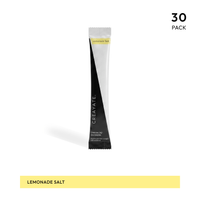
This is the thinking behind Creayate, which provides 4g of creatine monohydrate and 800mg of sodium in a single sachet. Understanding the role sodium plays in creatine delivery explains why sodium is included alongside the creatine. Creatine contributes to creatine pool replenishment, and a daily 4g serving sits comfortably above the 3g daily intake at which creatine is recognised to increase physical performance in successive bursts of short-term, high-intensity exercise. One sachet taken consistently, one routine, no faff. The cognitive research described above is an active and developing field, and Creayate is a food supplement, not a treatment for any condition.
Key Takeaways
- A 2024 meta-analysis of 16 randomised controlled trials and 492 adults found creatine improves memory with moderate-certainty evidence, with lower-certainty evidence for benefits to attention and processing speed.
- Your brain consumes 20% of your body's energy despite being 2% of body weight, and it runs on the same phosphocreatine to ATP system as your muscles.
- Benefits are greatest under metabolic stress: sleep deprivation, high cognitive load, ageing, and plant-based diets all amplify the effect.
- Standard dosing of 3 to 5g daily saturates brain creatine stores within two to four weeks. No loading phase needed.
The bottom line: Creatine is not just for muscles. It is the most evidence-backed cognitive supplement most people have never considered.
References
- Xu C, Bi S, Zhang W, Luo L. The effects of creatine supplementation on cognitive function in adults: a systematic review and meta-analysis. Frontiers in Nutrition. 2024;11:1424972. https://pubmed.ncbi.nlm.nih.gov/39070254/
- Rae C, Digney AL, McEwan SR, Bates TC. Oral creatine monohydrate supplementation improves brain performance: a double-blind, placebo-controlled, cross-over trial. Proceedings of the Royal Society B. 2003;270(1529):2147-2150. https://pubmed.ncbi.nlm.nih.gov/14561278/
- Avgerinos KI, Spyrou N, Bougioukas KI, et al. Effects of creatine supplementation on cognitive function of healthy individuals: a systematic review of randomized controlled trials. Experimental Gerontology. 2018;108:166-173. https://pubmed.ncbi.nlm.nih.gov/29704637/
- Kreider RB, Kalman DS, Antonio J, et al. International Society of Sports Nutrition position stand: safety and efficacy of creatine supplementation in exercise, sport, and medicine. Journal of the International Society of Sports Nutrition. 2017;14:18. https://pubmed.ncbi.nlm.nih.gov/28615996/
- Gordji-Nejad A, Matusch A, Kleedorfer S, et al. Single dose creatine improves cognitive performance and induces changes in cerebral high energy phosphates during sleep deprivation. Scientific Reports. 2024;14:4937. https://pubmed.ncbi.nlm.nih.gov/38418482/
This article is for informational purposes only and is not intended as medical advice. If you have specific health concerns, consult a qualified healthcare professional.