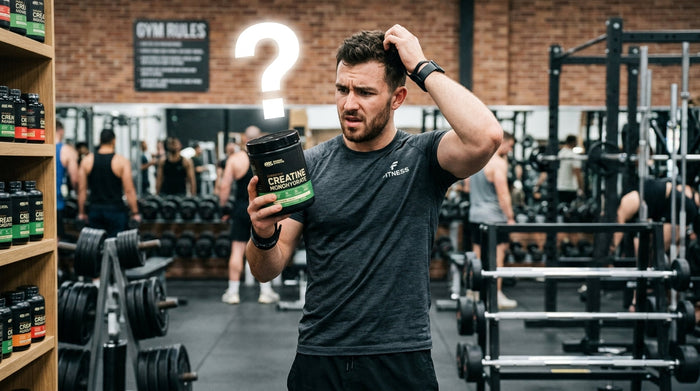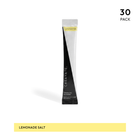


You have seen it in every supplement shop. Your mate who lifts swears by it. Andrew Huberman takes it every morning. Your TikTok algorithm has probably served you at least three videos about it this week. And yet, if someone asked you to explain what creatine actually does, at the cellular level, with confidence, most people would struggle.
That is not a criticism. It is a gap. Creatine is the most researched supplement in the history of sports science, backed by over five hundred peer reviewed studies, and most people's understanding of it stops at "it helps build muscle." That is like saying electricity "makes things turn on." Technically true. Completely insufficient.
So let's fix that. No jargon without explanation. No claims without citations.
THE MOLECULE YOUR BODY ALREADY MAKES
Here is something that surprises most people: creatine is not some exotic compound invented in a lab. Your body produces it naturally, every single day.
Your liver, kidneys, and pancreas synthesise approximately 1 to 2 grams of creatine daily from three amino acids: arginine, glycine, and methionine. You also get creatine from food, primarily red meat and fish. A 500g steak contains roughly 2 to 2.5g of creatine. Once produced or consumed, creatine is transported through your bloodstream to the tissues that need it most. About 95% of your body's creatine is stored in skeletal muscle. The remaining 5% sits in your brain, kidneys, and liver. Total body creatine stores for an average 70kg adult are approximately 120 to 140 grams.
This immediately answers one of the most common objections: "Creatine is not natural." It is. It is already in your blood right now. Supplementation simply tops up your existing stores to their full capacity, something most people's diets do not achieve, particularly if they eat less red meat than previous generations. Vegetarians and vegans consistently show lower baseline creatine stores than omnivores. If you do not eat meat or fish regularly, your body relies entirely on endogenous synthesis, which typically does not fully saturate your muscle creatine stores. Supplementation fills that gap.
HOW IT ACTUALLY WORKS: THE ATP PHOSPHOCREATINE SYSTEM
Every movement your body makes, from blinking to deadlifting, is powered by a molecule called adenosine triphosphate, or ATP. ATP is your cells' energy currency. When a muscle fibre contracts, ATP releases one of its three phosphate groups, producing energy and leaving behind adenosine diphosphate, or ADP. Think of it as spending a coin. You had three, now you have two, and the energy from that transaction powered the contraction.
The problem is that your muscles only store enough ATP for about 8 to 10 seconds of maximal effort. After that, you are running on empty unless your body can regenerate ATP quickly.
This is where creatine earns its place. Inside your muscle cells, creatine is stored as phosphocreatine, creatine with a phosphate group attached. When ATP runs out during intense effort, phosphocreatine donates its phosphate group to ADP, converting it back into ATP. Energy restored. Another rep possible.

Think of phosphocreatine as a rechargeable battery sitting next to your engine. When the engine burns through its fuel, the battery instantly tops it back up. The more phosphocreatine you have stored, the more times the battery can recharge the engine before you hit empty. This is called the phosphagen energy system, and it is the dominant energy pathway for efforts lasting up to about 30 seconds: sprints, heavy lifts, explosive movements, that final push on a padel court when you are lunging for a drop shot.
The mechanism was definitively characterised in the International Society of Sports Nutrition's position stand on creatine supplementation, published in the Journal of the International Society of Sports Nutrition in 2017. The paper reviewed the entire body of creatine research and concluded that creatine monohydrate is the most effective ergogenic nutritional supplement currently available for increasing high intensity exercise capacity and lean body mass during training. That is not a tentative finding. That is the consensus position of the world's leading sports nutrition research body.
BEYOND THE GYM: RECOVERY, HYDRATION, AND THE BRAIN
The ATP phosphocreatine pathway is the headline mechanism, but it is not the whole story. Creatine is also an osmolyte, meaning it draws water into cells. When muscle creatine stores increase through supplementation, intracellular water content increases alongside them. This is sometimes dismissed as "water weight," but the physiology is more interesting than that dismissal suggests. Increased cell hydration triggers anabolic signalling pathways. Your cells interpret the volumisation as a signal to build, not break down. This is why creatine users often notice a rapid initial weight gain of 1 to 2kg in the first week. It is not fat. It is not bloating in the conventional sense. It is water moving into muscle cells, where it belongs.
Several trials have also reported lower levels of creatine kinase, a marker of muscle damage, and reduced inflammation markers following intense training in creatine supplemented individuals. The leading hypothesis involves the cell hydration effect. Well hydrated cells are more resilient to mechanical stress. Emerging evidence suggests creatine may also enhance muscle glycogen storage, the fuel source for moderate intensity and endurance exercise, though this requires confirmation in larger trials.
But the most significant shift in the conversation over the last five years has been cognitive. A 2024 meta analysis published in Frontiers in Nutrition by Xu and colleagues reviewed 16 randomised controlled trials involving 492 adults and examined creatine's effects on cognitive function. The results showed improvements in memory performance with moderate certainty, as well as improvements in attention and information processing speed.
Your brain, despite weighing roughly 1.4kg, about 2% of your body weight, consumes approximately 20% of your body's total energy. It is, gram for gram, the most metabolically expensive organ you own. And just like your muscles, it relies on ATP, and therefore on phosphocreatine, to sustain that energy demand. When brain phosphocreatine levels are topped up through supplementation, cognitive performance improves, particularly under conditions of metabolic stress such as sleep deprivation, intense cognitive load, and ageing.
The seminal study in this area by Rae and colleagues, published in the Proceedings of the Royal Society B in 2003, found that six weeks of creatine supplementation at 5g per day significantly improved working memory and processing speed in healthy adults. The effect was measurable, reproducible, and has since been confirmed across multiple independent trials. This is why the cultural narrative around creatine has shifted so dramatically. It is no longer a bodybuilding supplement. It is a daily performance tool for your muscles, yes, but also for the organ that runs your meetings, writes your emails, and makes decisions under pressure all day.
WHAT FIVE HUNDRED STUDIES ACTUALLY SHOW
In 2025, Kreider and colleagues published what is arguably the most comprehensive safety and efficacy review ever conducted on a nutritional supplement. Published in the Journal of the International Society of Sports Nutrition, the paper analysed data from over 680 clinical trials involving more than 26,000 participants, with study durations ranging from days to five years.
The findings on efficacy were consistent. Creatine monohydrate supplementation at 3 to 5g per day reliably increases muscle phosphocreatine stores by 20 to 40%. This translates to measurable improvements in high intensity exercise performance, typically 5 to 15% improvements in strength, power output, and work capacity during repeated sprint or resistance exercise protocols. A separate 2025 meta analysis published in Nutrients, covering 69 randomised controlled trials and 1,937 participants, confirmed significant improvements in both upper and lower body strength, with particularly strong effects on lower body power.
The safety profile is, by any reasonable standard, exceptional. Across 680 trials and 26,000 participants, no clinically significant adverse effects were identified. No kidney damage. No liver damage. No dehydration. No cramping beyond what control groups experienced. This is worth pausing on, because very few substances in nutrition science have this volume of safety data behind them. Vitamin D does not. Omega 3s do not. Protein powder does not. Creatine has been tested more rigorously, in more populations, over longer periods, than virtually any other supplement on the market. And the safety signal is clean.
HOW MUCH YOU NEED AND HOW TO TAKE IT
The practical side of creatine is refreshingly simple. Take 3 to 5g per day. That is the range the ISSN position stand and every major review since confirms as optimal for most adults. A 90kg athlete may benefit from 5g, while a 60kg desk worker could saturate stores at 3 to 4g. Creayate contains 4g per sachet, which sits in the effective range for the vast majority of adults.
You do not need a loading phase. The old protocol of 20g per day for five days saturates stores faster, within a week rather than three to four weeks, but daily dosing at 3 to 5g reaches the same saturation point. Most researchers now recommend skipping the loading phase entirely. Less hassle, fewer digestive complaints, same end result.
Timing does not matter much. Some evidence suggests slightly better uptake when taken with a meal, but the effect is marginal. Consistency matters infinitely more than timing. The best time to take creatine is whenever you will actually remember to take it. As for form, creatine monohydrate is the only form worth considering. Not HCL, not ethyl ester, not buffered, not liquid. Every head to head comparison in the literature shows that monohydrate is either equal to or superior to every other form, at a fraction of the cost.
One thing worth knowing: a drink containing sodium improves creatine absorption, because the CreaT1 transporter that moves creatine into your cells is sodium dependent. Taking creatine with plain water works. Taking it with a sodium containing drink works better. This is one of the reasons we built Creayate as a combined creatine and electrolyte formula. The sodium is not just there for hydration, it is there to optimise creatine uptake at the cellular level.
There is no need to cycle creatine. Long term studies up to five years show no adverse effects and no downregulation of your body's natural creatine production. In the first week, you will likely notice a slight increase in body weight, typically 1 to 2kg, from intracellular water retention. This is normal and desirable. Over two to four weeks, as phosphocreatine stores saturate, you will begin to notice the performance effects: an extra rep or two on heavy sets, slightly faster recovery between sessions, and, if the cognitive research is any guide, a subtle improvement in mental clarity during afternoon slumps or after poor sleep.
The honest caveat: creatine is not dramatic. You will not feel a rush. You will not suddenly lift 20% more. The effects are real but incremental, the kind of thing you notice after a few weeks as a general improvement in your baseline, not as a single moment. This is what separates evidence based supplements from stimulants. The stimulants make you feel something immediately. Creatine actually changes something, quietly, over time. That is also why most people who start and stick with it never stop.
KEY TAKEAWAYS
1. Creatine is a naturally occurring compound that your body already produces, and supplementation simply tops up your stores to full capacity.
2. It works by regenerating ATP through the phosphocreatine system, giving your muscles and brain more fuel for high intensity effort.
3. Over 680 clinical trials involving 26,000 participants confirm it is both effective and safe, with no clinically significant side effects.
4. Recent meta analyses show creatine also improves memory, attention, and processing speed, making it as much a cognitive supplement as a physical one.
The bottom line: Creatine monohydrate at 3 to 5g per day is the single most evidence backed supplement you can take. The only surprising thing is that more people are not taking it.
This article is for informational purposes only and is not a substitute for professional medical advice. Consult your doctor before starting any new supplement regimen.
SOURCES
1. Kreider RB, Jagim AR, Stout JR, et al. International Society of Sports Nutrition position stand: safety and efficacy of creatine supplementation in exercise, sport, and medicine. Journal of the International Society of Sports Nutrition. 2025;22(1):2488937. PubMed
2. Buford TW, Kreider RB, Stout JR, et al. International Society of Sports Nutrition position stand: creatine supplementation and exercise. Journal of the International Society of Sports Nutrition. 2007;4:6. PubMed
3. Xu C, Bi S, Zhang W, Luo L. The effects of creatine supplementation on cognitive function in adults: a systematic review and meta analysis. Frontiers in Nutrition. 2024;11:1424972. PubMed
4. Rae C, Digney AL, McEwan SR, Bates TC. Oral creatine monohydrate supplementation improves brain performance: a double blind, placebo controlled, cross over trial. Proceedings of the Royal Society B. 2003;270(1529):2147-2150. PubMed
5. Effects of creatine supplementation on upper and lower body strength and power: a systematic review and meta analysis. Nutrients. 2025;17(17):2748. PubMed