

We are all told to cut back on salt. Almost no one is told to get more potassium. And yet a 2018 analysis of the UK national diet survey found that around a quarter of British women, and more of the youngest ones, fall below even the lowest healthy threshold for potassium intake.
Potassium is sodium's quieter partner. Sodium gets the headlines, the health warnings and the reformulated ready meals, while potassium does an enormous amount of work in the background and rarely gets a mention. It is the most abundant mineral inside your cells, it is central to every heartbeat and muscle contraction you make, and most people are getting less of it than they should. This is the primer: what it does, how much you need, what the different supplement forms actually mean, and why no electrolyte drink on the market can hand you your daily potassium.
THE MINERAL YOUR CELLS SPEND THE MOST ON
To understand potassium you have to understand the single most expensive piece of machinery your cells run. Embedded in the membrane of nearly every cell is the sodium-potassium pump, and it never stops. As described in the standard physiology, it pushes three sodium ions out of the cell and pulls two potassium ions in for every unit of energy it burns, over and over, in every cell you own.
The result is a deliberate imbalance. Potassium is kept high inside your cells and sodium high outside them. That difference in charge across the membrane, the membrane potential, is the electrical tension that nerves fire with and muscles contract on. Without it, a nerve cannot send a signal and a muscle cannot move. Maintaining it is so important that the pump is one of the cell's biggest fixed running costs, by common estimates consuming somewhere on the order of a fifth to two fifths of the energy a resting cell uses.

The diagram above shows the pump at work. The practical upshot is simple: potassium is not an optional extra. It sits at the heart of how your nervous system and muscles function, your heart included, which is exactly why your body guards its blood potassium level so tightly and why both too little and too much are problems.
Because the gradient is so finely tuned, your body holds blood potassium within a narrow band, and drifting outside it in either direction shows up quickly. Too little, and nerves and muscles turn sluggish and irritable: weakness, fatigue, muscle cramps and, in more serious cases, disturbances of heart rhythm. Too much is just as dangerous, which is why potassium is one of the few nutrients where more is emphatically not better. That twin sensitivity is the thread running through everything else in this article.
HOW MUCH YOU ACTUALLY NEED
The numbers are higher than most people expect. The World Health Organization recommends adults take in at least 3,510mg of potassium a day, and the UK reference intake is set at a similar 3,500mg. Most people fall short of this, which matters because potassium intake tracks with some of the most studied outcomes in nutrition.
A 2013 systematic review and meta-analysis by Aburto and colleagues, commissioned to inform the WHO guideline and published in the BMJ, pooled 22 controlled trials and showed that increasing potassium intake lowered blood pressure, by around 3.5mmHg systolic, with the effect concentrated in people who already had raised blood pressure. The same work linked higher potassium intake to roughly a quarter lower risk of stroke. A 2018 review by Weaver and colleagues put the blood-pressure benefit in the range of about 3,500 to 4,700mg a day. These are findings about dietary intake over time, not the effect of a single supplement, but they explain why the shortfall is worth taking seriously.
That same 2018 review noted a smaller but real benefit beyond blood pressure: in a trial of older adults, potassium citrate improved spine bone density by around 1.6 percent, a reminder that potassium's reach extends past the cardiovascular system. None of this makes potassium a medicine. It means a mineral most people quietly under-eat is tied to outcomes that matter, and the sensible way to close the gap is through what you eat.
WHY SO MANY OF US RUN SHORT
The shortfall is not really an accident. The modern diet has inverted the balance our bodies evolved with. For most of human history people ate enormous quantities of plants and almost no added salt, taking in far more potassium than sodium. The typical Western diet has flipped that, heavy in processed food that is high in sodium and stripped of the fruit, vegetables and pulses that carry potassium. The Derbyshire analysis of UK intakes is one snapshot of the consequence, with a large share of younger women in particular sitting below the threshold that defines an inadequate intake. We are, in effect, eating close to the opposite of what the sodium-potassium pump was built around.
THE FORMS, AND WHY THEY MATTER LESS THAN YOU THINK
Supplemental potassium comes in a few forms: potassium chloride is the most common, with potassium citrate and potassium gluconate also widely used. If you have read anything about magnesium, you might expect the form to make an enormous difference to absorption. With potassium, it largely does not.
This is the genuinely useful thing to know. A 2025 review by Merschmann and colleagues looking at the bioavailability of potassium salts found that potassium is well absorbed across the common forms, with no meaningful difference between chloride and citrate. Unlike magnesium, where a poorly chosen form like oxide is barely absorbed, potassium is taken up efficiently almost regardless of the salt it is bound to. The body absorbs the large majority of the potassium you eat or supplement.
This is where it gets interesting. If the form barely changes how much potassium you absorb, what is it actually for? The answer is the other half of the molecule, the anion bound to the potassium. Chloride is the standard partner and the one that matches what you lose in sweat. Citrate is alkalising, which is why it is the form studied in the context of bone health and kidney stones rather than for any absorption advantage. So when a product makes a fuss about its particular potassium form being superior for uptake, treat it with scepticism. The evidence does not support a meaningful absorption hierarchy the way it does for magnesium.
WHY MOST DRINKS GET IT WRONG
Here is the part that surprises people. No electrolyte drink, Creayate included, can give you your daily potassium, and the ones that imply they can are selling a fantasy. The reason is partly safety and partly chemistry.
Potassium is tightly regulated in the blood because too much of it, a state called hyperkalaemia, is dangerous, particularly for people with reduced kidney function or those taking certain blood-pressure medicines such as ACE inhibitors, ARBs, or potassium-sparing diuretics. The UK Expert Group on Vitamins and Minerals reviewed this and set a guidance level for supplemental potassium rather than encouraging large doses, noting that high supplemental amounts can also irritate the gut. Responsible products therefore keep added potassium modest on purpose. A drink that tried to pack in a day's worth would be both reckless for susceptible people and, frankly, undrinkable, because potassium chloride is distinctly bitter and hard to mask.
It is worth keeping the risk in proportion. For most healthy people a modest top-up is perfectly safe, and the everyday problem is far more about getting too little potassium than too much. The caution applies specifically to those whose kidneys, or whose medication, impair their ability to clear it, which is precisely the group for whom a casually high-dose product would be a genuine hazard.
So the real failure is not that drinks under-dose potassium. It is the expectation, encouraged by some marketing, that a drink should be your potassium source at all. It cannot safely be. What a sensible drink offers is a modest top-up alongside the sodium you actually lose in large amounts through sweat, while the serious potassium comes from your plate. Potassium is lost in sweat too, though in far smaller quantities than sodium, which is why including a modest amount alongside the sodium you lose in bulk is reasonable rather than pointless, as long as nobody pretends it is your day's supply.
WHAT THIS MEANS FOR YOU
The practical takeaway reorders most people's priorities. Food does the heavy lifting on potassium, and it is not even close. A baked potato, a portion of beans or lentils, leafy greens, a banana, dried apricots, a glass of milk: these deliver potassium in the hundreds of milligrams, the scale your 3,500mg target is actually built from. If you want to fix a potassium shortfall, the kitchen is where you do it, not the supplement shelf.
To put rough numbers on it, a medium baked potato eaten with its skin carries on the order of 900 to 1,000mg of potassium, a portion of cooked beans or lentils several hundred, and a banana around 400mg. Stack two or three such foods across a day and the 3,500mg target stops looking daunting. That is simply a scale a single sachet cannot reach, and was never meant to.
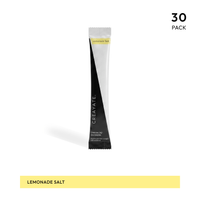
Where a supplement fits is as a small, sensible top-up rather than a replacement. Creayate includes 200mg of potassium, as potassium chloride, per sachet. That is a deliberately modest amount, well within safety guidance, meant to sit alongside the sodium you lose through sweat, not to stand in for a potassium-rich diet. Creayate is a food supplement and not a substitute for varied, balanced eating, and if you have a kidney condition or take blood-pressure medication, speak to a qualified healthcare professional before taking any added potassium.
The single thing to do tomorrow: look at your plate before you look at any sachet. A potato with its skin on, or a bowl of beans, will do more for your potassium than any electrolyte drink ever could, and that is true no matter which clever-sounding form the drink uses.
Key Takeaways
1. Potassium is the main mineral inside your cells and powers the sodium-potassium pump that nerves and muscles, including your heart, depend on. 2. Adults need around 3,500mg a day, far more than a supplement provides, and many people, especially women, fall short. 3. Unlike magnesium, potassium is well absorbed across the common forms, so the form is about the accompanying anion, not an absorption advantage. 4. No electrolyte drink can safely supply your daily potassium, because high supplemental doses risk hyperkalaemia, so food remains the main source and a drink is only a top-up.
The bottom line: Potassium matters enormously, but you get it from your plate, not your water bottle, and any drink is only ever a modest top-up.
SOURCES
1. Weaver CM, Stone MS, Lobene AJ, et al. What is the evidence base for a potassium requirement? Nutrition Today. 2018;53(5):184-195. https://pmc.ncbi.nlm.nih.gov/articles/PMC6181280/
2. World Health Organization. Guideline: Potassium Intake for Adults and Children. Geneva: World Health Organization; 2012. https://www.ncbi.nlm.nih.gov/books/NBK132453/
3. Aburto NJ, Hanson S, Gutierrez H, et al. Effect of increased potassium intake on cardiovascular risk factors and disease: systematic review and meta-analyses. BMJ. 2013;346:f1378. https://pubmed.ncbi.nlm.nih.gov/23558164/
4. Derbyshire E. Micronutrient intakes of British adults across mid-life: a secondary analysis of the UK National Diet and Nutrition Survey. Frontiers in Nutrition. 2018;5:55. https://pmc.ncbi.nlm.nih.gov/articles/PMC6060686/
5. Pirahanchi Y, Jessu R, Aeddula NR. Physiology, sodium potassium pump. In: StatPearls. StatPearls Publishing; 2023. https://www.ncbi.nlm.nih.gov/books/NBK537088/
6. Merschmann R, Burgmer C, Eckert GP, et al. Bioavailability of magnesium and potassium salts used as potential substitutes for sodium chloride in human nutrition: a review. Molecular Nutrition and Food Research. 2025;69:e70227. https://pmc.ncbi.nlm.nih.gov/articles/PMC12643194/
7. Expert Group on Vitamins and Minerals. Safe Upper Levels for Vitamins and Minerals. London: Food Standards Agency; 2003. https://cot.food.gov.uk/sites/default/files/vitmin2003.pdf
This article is for informational purposes only and is not intended as medical advice. If you have a kidney condition, or take ACE inhibitors, ARBs, or potassium-sparing diuretics, consult a qualified healthcare professional before taking any supplemental potassium. </content>