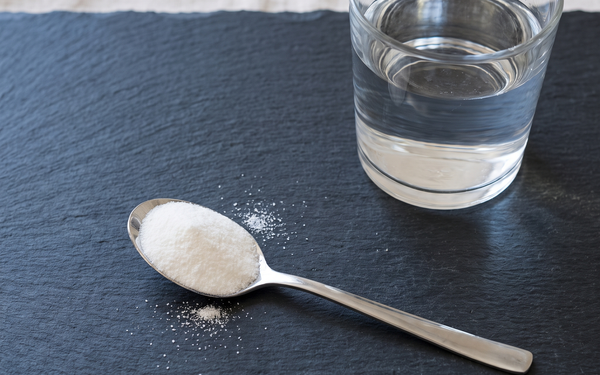


Every morning, millions of people scoop creatine powder into a glass of plain water, stir it around, grimace at the chalky taste, and force it down. They have heard the podcasts. They know creatine works. They are doing the right thing.
Except they are missing half the equation.
Here is something most supplement brands will not tell you, because it is not in their interest for you to know: the transporter that moves creatine from your gut into your bloodstream, and from your bloodstream into your muscles, does not work without sodium. Not "works a bit less efficiently." It literally cannot function. The mechanism requires sodium and chloride ions to be present before a single molecule of creatine can cross a cell membrane.
If you are taking your creatine with plain water and no electrolytes, you are leaving a significant amount of it sitting in your intestines, unabsorbed. You are paying for 5 grams but your body might be using 3. This is the science that changed everything for us, and the reason Creayate exists.
WHAT EVERYONE GETS WRONG ABOUT CREATINE ABSORPTION
Let's rewind. Creatine monohydrate is the most researched supplement in history. That is not marketing. It is a statement of fact backed by over 500 peer reviewed studies. The International Society of Sports Nutrition, the Mayo Clinic, and virtually every credible sports scientist on the planet agree: if you are going to take one supplement, make it creatine. It improves strength, power output, recovery, and, increasingly, cognitive function.
So the question was never whether creatine works. It was always how to make it work better.
Most people assume creatine absorption is simple. You eat it, it goes into your blood, your muscles take it up, job done. The supplement industry has spent thirty years reinforcing this assumption because it keeps things easy to market. Scoop, stir, drink. Buy our tub, it is the same as theirs but with a nicer label.
But the actual biochemistry tells a different story. And once you understand it, you cannot unsee it.
THE TRANSPORTER THAT CHANGES EVERYTHING
In 2002, a team of researchers at the University of Seville published a study that should have reshaped how the entire supplement industry thinks about creatine. The paper, authored by Peral and colleagues and published in The Journal of Physiology, was the first to characterise how creatine is actually absorbed in the human small intestine.
What they found was striking.
The creatine transporter, known as CRT or more specifically CreaT1, encoded by the gene SLC6A8, sits on the surface of enterocytes, the absorptive cells lining your intestinal wall. This transporter is the gatekeeper. If creatine is going to get from your gut into your bloodstream, it has to pass through CreaT1. There is no meaningful alternative route at physiological concentrations.
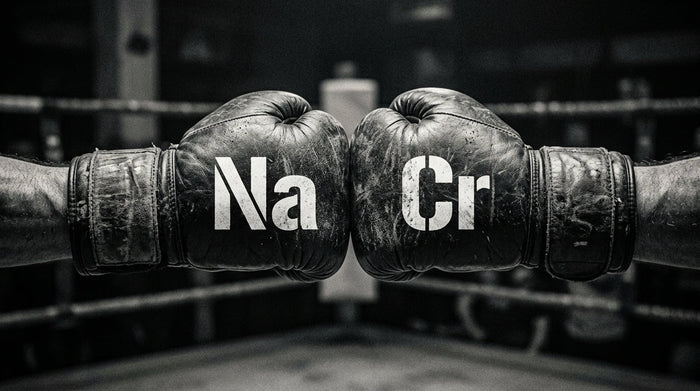
Here is the critical finding: CreaT1 is sodium and chloride dependent. The researchers demonstrated that creatine uptake by enterocytes is electrogenic and requires the presence of both sodium and chloride ions. The probable stoichiometry, the ratio of molecules needed, is 2 sodium ions and 1 chloride ion for every 1 creatine molecule transported.
Think of CreaT1 as a revolving door with a very specific entry requirement. You cannot push through alone. You need two sodium ions and one chloride ion as your escorts. Without them, you are standing outside.

This sodium dependency does not stop at the gut. The same transporter family operates at the muscle cell membrane, where creatine is taken up from the bloodstream into skeletal muscle for storage as phosphocreatine. Again, sodium and chloride are required. The entire journey, from sachet to muscle cell, is sodium gated.
WHAT HAPPENS WHEN YOU COMBINE THEM
If the transporter story were purely theoretical, it would be interesting but not actionable. The question is whether combining creatine with electrolytes actually produces better outcomes in real humans doing real exercise.
It does.
A 2018 double blind randomised controlled study published in the Journal of the International Society of Sports Nutrition tested this directly. Crisafulli and colleagues at Western Washington University recruited 23 male recreational cyclists and split them into two groups: one receiving a creatine electrolyte supplement and one receiving a placebo. Both groups completed five 15 second all out cycling sprints with 2 minute recovery periods, measured before and after six weeks of supplementation.
The results were clear. The creatine electrolyte group saw a 4% increase in overall peak power, from 734W to 765W, and a 5% increase in overall mean power, from 586W to 615W. The placebo group showed no significant changes whatsoever.
The researchers noted something important: this was the first time a significant increase in both overall and repeated peak power output had been observed during sprint cycling following creatine electrolyte supplementation. Previous studies using creatine alone had shown mixed results for this type of repeated sprint protocol. The addition of electrolytes appeared to be the differentiating factor.
A separate study comparing creatine electrolyte supplementation against creatine monohydrate alone in NCAA Division II athletes found that the creatine electrolyte group showed significantly greater improvements in anaerobic power measures, including bench press one rep max, vertical jump height, and 100 yard dash time, compared to the creatine only group. Same creatine dose. Different results. The electrolytes made the difference.
THE HYDRATION FEEDBACK LOOP
There is a second layer to this story that goes beyond absorption.
Creatine works, in part, by drawing water into muscle cells. This process, called cell volumisation, is one of the key mechanisms behind creatine's benefits. When muscle cells are hydrated from the inside, they function better. They produce more force. They signal for more protein synthesis. They recover faster. The initial 1 to 2kg of weight gain most people experience when starting creatine is not bloating. It is your muscle cells filling with water. That is a good thing.
But here is the catch: creatine can only draw water into cells if there is water available to draw. And your body can only maintain adequate intracellular fluid if the extracellular fluid balance is right. That balance is governed primarily by sodium.
Sodium is the master regulator of fluid distribution in your body. It creates the osmotic gradient that determines where water goes. When sodium levels are adequate, water is absorbed efficiently from your gut, retained in your bloodstream, and made available for creatine to pull into muscle cells. When sodium is low, which it is for most people first thing in the morning after 6 to 8 hours of overnight dehydration, the whole system underperforms.
So the relationship between creatine and electrolytes is not just about absorption at the transporter level. It is a feedback loop. Sodium drives water absorption. Without it, the water you drink passes straight through you and your kidneys detect dilute blood and flush the excess. Adequate hydration supports creatine transport, because the CreaT1 transporter requires sodium, which requires you to actually have sodium in your system. Creatine then draws water into muscle cells, but only if there is hydrated blood plasma to draw from. Finally, cell volumisation triggers anabolic signalling, meaning hydrated muscle cells are stronger, more resilient, and recover faster.
Remove any link in that chain and the whole system is less effective. This is why taking creatine with plain water on an empty, dehydrated stomach is the least optimal way to supplement. It is also, unfortunately, exactly what most people do every morning.
WHY THIS COMBINATION DID NOT EXIST BEFORE
If the science is this clear, why has nobody combined creatine and sodium led electrolytes in a single product before?
Honestly? Because the supplement industry is built around selling you more products, not fewer. A creatine brand wants to sell you creatine. An electrolyte brand wants to sell you electrolytes. Neither has an incentive to tell you that their product works significantly better when combined with the other one. That would mean admitting their standalone product is suboptimal.
There are also practical formulation challenges. Creatine monohydrate is a bulky ingredient. Four grams takes up space. Adding 800mg of sodium, 200mg of potassium, and 60mg of magnesium on top of that, while keeping the sachet a reasonable size and making the whole thing actually taste good, is genuinely difficult. We spent months on it. The first dozen formulations were, to put it diplomatically, not something you would look forward to drinking.
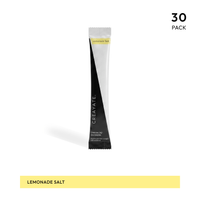
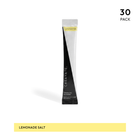
But we got there. A slightly salty, clean lemonade flavour that dissolves completely and delivers everything in a single tear and pour sachet. No scoops. No second tub. No measuring. Sixty seconds from packet to glass to done.
WHAT THIS MEANS FOR YOUR ROUTINE
The practical application is straightforward.
If you are already taking creatine, the single biggest improvement you can make is ensuring you take it with adequate sodium. Not a sprinkle. Not a pinch of table salt. A meaningful dose, 500 to 1000mg of sodium, taken at the same time as your creatine. This supports both intestinal absorption via CreaT1 and the downstream hydration cascade that makes creatine effective at the muscle level.
The optimal time is first thing in the morning. You have been fasting for 6 to 8 hours. You are mildly dehydrated. Your cortisol is peaking as part of the cortisol awakening response. This is when your body is most receptive to rehydration, and when sodium containing fluids have the greatest absorption advantage over plain water. A 2024 review published in Nutrients confirmed that hypotonic drinks with moderate to high sodium levels and low sugar accelerate intestinal water absorption and improve fluid retention compared to standard sports drinks or water alone.
Take your creatine with electrolytes. Take them in the morning. Take them every day. That is the whole protocol.
This is exactly why we built Creayate with 4g creatine, 800mg sodium, 200mg potassium, and 60mg magnesium in a single sachet. The research told us these ingredients belong together. The CreaT1 transporter told us. The sprint cycling data told us. The hydration science told us. We just listened.
KEY TAKEAWAYS
1. The CreaT1 transporter requires 2 sodium ions and 1 chloride ion to move each creatine molecule into your cells, so without sodium, creatine absorption is significantly impaired.
2. A six week creatine electrolyte study showed 4% greater peak power and 5% greater mean power compared to placebo, improvements not consistently seen with creatine alone in similar protocols.
3. Creatine and sodium work as a feedback loop: sodium drives water absorption, creatine draws water into muscles, and the whole system depends on adequate electrolyte status.
4. The best time to take both is first thing in the morning, when you are most dehydrated and your body is most receptive to sodium enhanced fluid absorption.
The bottom line: Creatine and electrolytes are not two separate supplements that happen to be convenient together. They are two halves of the same biochemical system. Taking one without the other means you are not getting the full benefit of either.
This article is for informational purposes only and is not a substitute for professional medical advice. Consult your doctor before starting any new supplement regimen.
SOURCES
1. Peral MJ, Garcia-Delgado M, Calonge ML, et al. Human, rat and chicken small intestinal Na+Cl- creatine transporter: functional, molecular characterization and localization. The Journal of Physiology. 2002;545(1):133-144. PubMed
2. Crisafulli DL, Buddhadev HH, Brilla LR, et al. Creatine electrolyte supplementation improves repeated sprint cycling performance: a double blind randomized control study. Journal of the International Society of Sports Nutrition. 2018;15:21. PubMed
3. Kreider RB, Jagim AR, Antonio J, et al. Creatine supplementation is safe, beneficial throughout the lifespan, and should not be restricted. Frontiers in Nutrition. 2025. PubMed
4. Roschel H, Gualano B, Ostojic SM, Rawson ES. Creatine supplementation and brain health. Nutrients. 2021;13(2):586. PubMed
5. Ribeiro F, Longobardi I, Perim P, et al. Compositional aspects of beverages designed to promote hydration before, during, and after exercise: concepts revisited. Nutrients. 2024;16(2):183. PMC
6. Kreider RB, Kalman DS, Antonio J, et al. International Society of Sports Nutrition position stand: safety and efficacy of creatine supplementation in exercise, sport, and medicine. Journal of the International Society of Sports Nutrition. 2017;14:18. PubMed