

You have seen "electrolytes" on the label of every sports drink, hydration tablet, and coconut water carton in the supermarket. The word gets thrown around so freely it has practically lost its meaning. It has become a vague synonym for "good hydration stuff," the nutritional equivalent of saying a car has "good engine things."
Electrolytes are not a marketing concept. They are specific minerals that carry an electrical charge when dissolved in water, and they run virtually every critical function in your body. Your heartbeat. Your ability to think clearly. Whether your muscles contract when your brain tells them to.
There are seven of them. Most people cannot name more than two. And the vast majority of electrolyte products on the market get the balance completely, demonstrably wrong.
Let's fix both problems.
What an electrolyte actually is
An electrolyte is any mineral that dissociates into ions (charged particles) when dissolved in fluid. In your body, these ions create electrical gradients across cell membranes. Those gradients power nerve signals, muscle contractions, fluid balance, pH regulation, and nutrient transport.
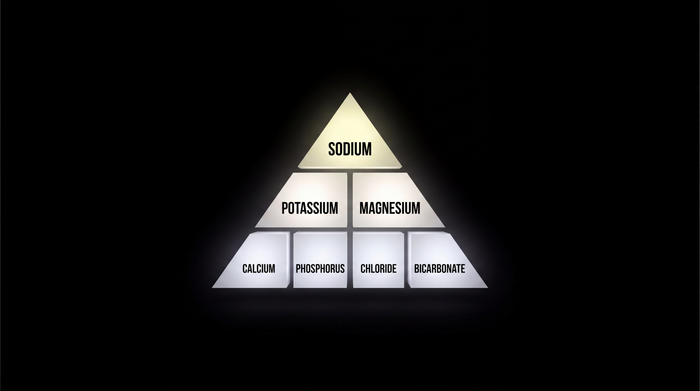
The seven electrolytes in your body are sodium, potassium, magnesium, calcium, phosphorus, chloride, and bicarbonate.
They are not equally important for supplementation. That is a critical distinction most products ignore. Calcium, phosphorus, chloride, and bicarbonate are almost always adequately supplied by a normal diet. You get calcium from dairy and leafy greens. Phosphorus from virtually everything. Chloride pairs with sodium naturally. Bicarbonate is regulated by your kidneys.
The three that matter for supplementation, the three most people are either deficient in or lose disproportionately through sweat and daily metabolism, are sodium, potassium, and magnesium. These are the big three. The ones your body cannot reliably get enough of from food alone, particularly if you exercise, sweat, drink coffee, or live in anything warmer than a mild British spring.

Understanding why these three matter requires understanding what each one actually does inside your body. Not the label claims. The physiology.
Sodium: the one everyone gets wrong
Sodium is the most abundant electrolyte in your extracellular fluid, the fluid that surrounds every cell in your body. It is the primary electrolyte lost through sweat. And it is the single most important mineral for driving water absorption at the cellular level.
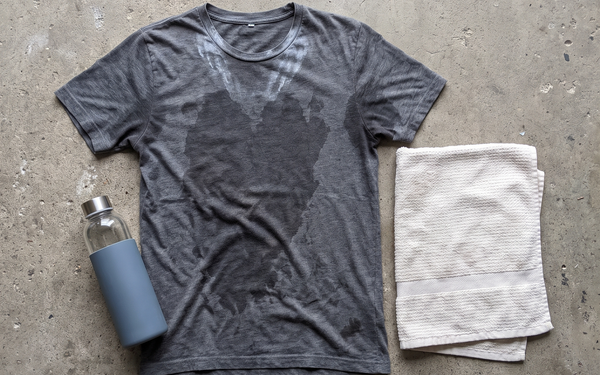
When you sweat, you do not lose a generic mix of minerals. You lose mostly sodium. Research by Baker and colleagues, published in the Journal of Sports Sciences in 2016, measured sweat sodium concentrations across hundreds of athletes and found losses ranging from 800mg to over 2,000mg per hour of moderate to intense exercise, depending on individual variation, fitness level, and environmental conditions.
That is an enormous amount of sodium. A typical electrolyte tablet contains 250 to 350mg. A standard sports drink contains even less. If you are training for an hour and losing 1,200mg, a single tablet does not even cover a third of the deficit.
Sodium's role goes beyond replacing what you sweat out. Sodium is the key driver of intestinal water absorption. When sodium is present in the gut, it creates an osmotic gradient that pulls water across the intestinal wall and into your bloodstream. Without adequate sodium, water sits in your gut, eventually passes through to your kidneys, and gets excreted. You drank it. Your cells never received it.
This is why you can drink litres of plain water and still feel dehydrated. Without sodium, the water does not stick.
The 2024 review published in Nutrients by Rowlands and colleagues examined this mechanism in detail and confirmed that beverages with higher sodium content and minimal sugar produced the fastest intestinal absorption rates and the highest fluid retention. They significantly outperformed both plain water and conventional sports drinks.
To put specific numbers on it: the Beverage Hydration Index research by Maughan and colleagues, published in the American Journal of Clinical Nutrition in 2016, measured how well thirteen different drinks hydrated the body over four hours compared to water. Oral rehydration solutions (high sodium, minimal sugar) retained roughly 40 to 50% more fluid than water alone. Standard sports drinks performed barely better than water despite costing five times as much.
There is another dimension to sodium less discussed but equally important: nerve function. Every nerve signal in your body, every thought, every voluntary and involuntary muscle command, depends on sodium channels. Without adequate sodium, nerve conduction slows. You experience this as slower reactions, impaired coordination, and the kind of mental fog most people blame on poor sleep or too much screen time.
Potassium: the intracellular partner
If sodium controls the fluid outside your cells, potassium controls the fluid inside them. Together, they maintain the electrochemical gradient across every cell membrane in your body through the sodium-potassium pump, an enzyme that moves three sodium ions out of each cell and two potassium ions in, thousands of times per second, in every cell you own.
This pump consumes roughly 20 to 40% of your resting metabolic energy. By energy expenditure, it is one of the single most important biochemical processes in your body. Without it, your nerve cells cannot fire. Your muscle cells cannot contract. Your heart cannot beat.
Potassium deficiency, even mild deficiency, manifests as muscle weakness, fatigue, cramping, and irregular heartbeat. Most adults in the UK consume less potassium than the recommended adequate intake of 3,500mg per day. Active individuals who sweat regularly are at even greater risk, because potassium is lost in sweat alongside sodium (albeit in smaller quantities).
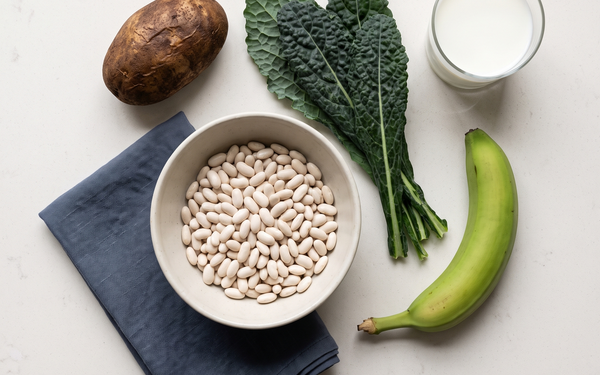
The best dietary sources include avocados (roughly 975mg per fruit), sweet potatoes (540mg per medium potato), spinach, and white beans. Bananas come in at 420mg each, oddly over-credited as a potassium source. Getting 3,500mg from food alone requires consistent, deliberate dietary choices. Most people fall short, which is why supplementing a moderate amount alongside your morning electrolytes helps bridge the gap.
It is worth noting that high doses of supplemental potassium carry a hyperkalaemia risk for susceptible individuals, particularly those with impaired kidney function, which is why added potassium in food supplements is limited in many countries including the UK. Creayate includes 200mg of potassium per sachet.
The practical point: potassium works alongside sodium. They are not competitors, despite decades of misguided dietary advice that framed sodium reduction and potassium increase as opposing goals. They are partners.
Magnesium: the recovery mineral
Magnesium is a cofactor in over 300 enzymatic reactions in your body, including ATP production (the same energy system creatine supports), protein synthesis, muscle and nerve function, and blood glucose regulation. By biochemical involvement, it is one of the most versatile minerals in human physiology.
Roughly 30% of the UK population does not get enough of it.
For athletes and active individuals, magnesium's role in muscle relaxation is particularly relevant. Calcium drives muscle contraction; magnesium drives muscle relaxation. An imbalance, too much contraction signal and not enough relaxation signal, contributes to cramping, prolonged soreness, and impaired recovery.
The form of magnesium matters significantly. Magnesium oxide, the cheapest and most common form in supplements, has a bioavailability of roughly 4%. 96% of what you swallow passes straight through you. It is essentially a laxative with a magnesium label. Magnesium citrate is better, around 25 to 30%. Magnesium malate, the form used in Creayate, offers superior bioavailability and has the added benefit of malic acid, which participates directly in the Krebs cycle (your body's central energy production pathway).
This is a case where the specific choice of ingredient matters more than the headline dose. 60mg of magnesium malate delivers more usable magnesium to your cells than 200mg of magnesium oxide. The label number is irrelevant if your body cannot absorb it. The vast majority of multivitamins and electrolyte products use oxide because it is cheap and allows them to print an impressive milligram figure.
Why most electrolyte products get it wrong
Walk into any pharmacy or health shop and pick up three electrolyte products at random. Read the labels. You will almost certainly find the same pattern: low sodium, moderate potassium, trace magnesium, and a lot of sugar.
The reason is simple. Sodium tastes salty, and brands are terrified of making something that does not taste sweet and palatable on first sip. So they under-dose the mineral that matters most and compensate with sugar, citric acid, and artificial flavourings. The result is a product that tastes like a soft drink and hydrates only marginally better than water.
The numbers are stark. A typical supermarket electrolyte tablet contains 250mg sodium. A leading sports drink contains roughly 200mg per 500ml serving. Your body loses 800 to 2,000mg of sodium per hour of exercise.
These products are not designed to solve the hydration problem. They are designed to sell.
A properly formulated electrolyte drink should lead with sodium (800mg or more per serving), include meaningful doses of potassium and a bioavailable form of magnesium, contain zero or minimal sugar, and be hypotonic. Hypotonic means its total dissolved solute concentration is lower than your blood plasma, allowing faster absorption across the intestinal wall.
What this means for you
The practical application is simpler than the science might suggest.
Prioritise sodium. If you are only going to supplement one electrolyte, make it sodium. It drives fluid absorption, it is the electrolyte you lose most of through sweat, and it is the one most products under-dose. Aim for 800 to 1,000mg per serving if you are active.
Include potassium and magnesium. Both are commonly under-consumed in modern diets. Both play essential roles in muscle function, nerve signalling, and recovery. Look for magnesium in a bioavailable form (citrate, malate, or glycinate), not oxide.
Skip the sugar. Zero-sugar, hypotonic formulations absorb faster and retain better than sugar-loaded sports drinks. Sugar in an electrolyte drink is there for taste, not function.
Read labels critically. Check the actual milligrams of sodium per serving, not the marketing claims. If a product advertises "complete electrolyte support" but contains less than 300mg sodium, it is not solving your hydration problem.
Start in the morning. After overnight fluid loss, your first drink is the highest-leverage hydration moment of the day. Electrolytes in the morning, before coffee and before food, are absorbed faster and retained longer than at any other time.
Do not confuse thirst signals with hydration status. Thirst is a delayed indicator. By the time you feel thirsty, your body is already 1 to 2% dehydrated, enough to measurably impair both physical and cognitive performance. A consistent morning electrolyte routine addresses this by starting the day from a hydrated baseline.
Key takeaways
- There are seven electrolytes, but only three (sodium, potassium, magnesium) typically need supplementing. The rest come from food.
- Sodium is the primary electrolyte lost through sweat (800 to 2,000mg per hour) and the key driver of intestinal water absorption. Without it, water passes straight through.
- Most electrolyte products dramatically under-dose sodium and over-rely on sugar, which actually slows absorption.
- The ratio between electrolytes matters as much as the total amount. More minerals does not mean better hydration.
The bottom line: Electrolytes are not a marketing buzzword. They are the minerals that keep your cells, muscles, and brain functioning. Get the big three right, sodium first, potassium and magnesium behind it, and your hydration changes fundamentally.
Sources
- Baker LB, Barnes KA, Anderson ML, et al. Normative data for regional sweat sodium concentration and whole-body sweating rate in sport. Journal of Sports Sciences. 2016;34(4):358-368. pubmed.ncbi.nlm.nih.gov/26070030
- Rowlands DS, Kopetschny BH, Badenhorst CE. Compositional aspects of beverages designed to promote hydration before, during, and after exercise: concepts revisited. Nutrients. 2024;16(1):1-25. pmc.ncbi.nlm.nih.gov/articles/PMC10781183
- Maughan RJ, Watson P, Cordery PA, et al. A randomized trial to assess the potential of different beverages to affect hydration status: development of a beverage hydration index. American Journal of Clinical Nutrition. 2016;103(3):717-723. pubmed.ncbi.nlm.nih.gov/26702122
- Shrimanker I, Bhatt S. Electrolytes. In: StatPearls. StatPearls Publishing; 2024. pubmed.ncbi.nlm.nih.gov/31082167
This article is for informational purposes only and is not intended as medical advice. If you have specific health concerns, consult a qualified healthcare professional.