

You drank two litres yesterday. Maybe three. You felt good about it. And then you slept for seven hours, breathed out roughly 400ml of moisture, perspired another 200ml into your sheets, and woke up in a state of mild dehydration before your feet even touched the floor.
This is not a failure of discipline. It is basic physiology. Every night, your body runs a metabolic marathon while you sleep, repairing tissue, consolidating memories, cycling through hormone production, and it burns through water to do it. By morning, your blood is thicker, your sodium stores are depleted, and your cognitive function is measurably impaired.
Most people reach for coffee. Some reach for water. Almost nobody reaches for the thing that would actually fix the problem fastest. And that is because most people do not understand what is actually happening in those eight hours.
Let's walk through it, hour by hour.
THE OVERNIGHT DEFICIT NOBODY TALKS ABOUT
Here is the standard advice you have heard a thousand times: drink eight glasses of water a day. Stay hydrated. Carry a bottle. Simple enough.
But this advice treats hydration like a bank balance. Put water in, take water out, keep the numbers positive. It completely ignores the fact that not all hydration is equal, and not all moments are equal either.
The reality is that your body's hydration needs follow a curve, and that curve has a sharp dip between roughly 11pm and 7am. During sleep, you are not just passively losing water. Your body is actively using it. Your kidneys are filtering blood, roughly 180 litres of it per day, with the highest filtration rates during the early morning hours. Your lungs are humidifying every breath you exhale, and you take approximately 15,000 to 20,000 breaths during a seven hour sleep. Each one carries water vapour out of your body. Your cells are running repair processes that consume intracellular fluid.
Your skin is losing water too, even in a cool bedroom. Transepidermal water loss, the passive evaporation of moisture through the skin, continues regardless of temperature. In winter, when heating dries the air, this rate actually increases.
And here is what makes it worse: you cannot drink while you are unconscious. That sounds obvious, but the implication is massive. It means every single morning, without exception, you wake up in a fluid deficit. The question is not whether you are dehydrated when you wake up. You are. The question is how dehydrated, and what you do about it in the first thirty minutes.
WHAT THE RESEARCH ACTUALLY SHOWS
The numbers are more dramatic than you would expect. The American College of Sports Medicine's position stand on exercise and fluid replacement, one of the most cited hydration papers in sports science, establishes that overnight water losses through respiration and transepidermal evaporation typically range between 500ml and 700ml over a standard seven to eight hour sleep period. That is roughly a pint and a half of water, gone before breakfast.
But water loss is only half the story. The other half is what happens to your hormones.
Your body runs on a cortisol rhythm. Cortisol, the hormone most people associate with stress, actually follows a predictable daily pattern called the circadian cortisol curve. It is lowest around midnight, begins climbing in the early hours, and then spikes sharply in the first 30 to 45 minutes after waking. This spike is called the cortisol awakening response, and it has been extensively documented. A 2010 study by Scheer and colleagues published in the Proceedings of the National Academy of Sciences confirmed that this response is one of the most robust features of human circadian biology. It happens every morning, in virtually every healthy adult.
Why does this matter for hydration? Because cortisol affects kidney function. Elevated cortisol increases renal blood flow and glomerular filtration rate, which means your kidneys are working harder in the first hour after waking than at almost any other point in the day. If you drink plain water during this window, your body processes it rapidly, but without adequate sodium in your plasma, your kidneys treat that water as excess and flush it straight through.
There is a compounding factor that deserves mention: coffee. Most people's first instinct upon waking is to put the kettle on. Caffeine is a mild diuretic. It increases urine output by inhibiting antidiuretic hormone and increasing glomerular filtration. Drinking coffee as your first fluid of the day layers a diuretic effect on top of the cortisol driven kidney activity you are already experiencing. The result is accelerated water loss at the exact moment you most need to retain fluid. This is not an argument against coffee. It is an argument for drinking something hydrating before your coffee.

A landmark 2024 review published in Nutrients examined the compositional aspects of beverages designed to promote hydration. The findings were unambiguous: drinks containing moderate to high sodium concentrations and low sugar content accelerated intestinal water absorption and significantly improved fluid retention compared to plain water and standard sports drinks. The mechanism is straightforward. Sodium creates an osmotic gradient across the intestinal wall that pulls water into the bloodstream. Without that gradient, water passes through the gut, enters the blood briefly, dilutes plasma sodium concentration, and triggers the kidneys to excrete the excess. You feel like you have hydrated. Your cells have not noticed.
This is why you can drink a full glass of water first thing in the morning and still feel groggy an hour later. The water went in and came straight back out. Your cells never got it.
WHY PLAIN WATER IS NOT ENOUGH
When you drink plain water on an empty stomach first thing in the morning, it enters your stomach, passes into the small intestine, and begins to be absorbed. But absorption is not passive. It follows osmotic gradients. Water moves from areas of low solute concentration to areas of high solute concentration.
If the fluid in your gut has no sodium, and the fluid in your blood has normal sodium levels, the gradient is relatively weak. Water absorbs slowly. Meanwhile, the influx of water dilutes your plasma sodium, and your body's sodium sensing mechanisms, primarily the osmoreceptors in the hypothalamus, detect the dilution and signal the kidneys to excrete water to restore balance. The result: you urinate frequently, you still feel thirsty, and your cells remain under hydrated.
Researchers call this free water clearance. Your body maintains plasma osmolality within a very tight range, roughly 275 to 295 milliosmoles per kilogram. When water enters the bloodstream faster than sodium, osmolality drops, and the hypothalamus reduces secretion of antidiuretic hormone. Without it, your kidneys stop reabsorbing water from urine. The water goes straight to the bladder. This is why your first two trips to the bathroom after waking are often high volume, pale, dilute urine. That is not "flushing toxins." It is your kidneys dumping the water you just drank because it arrived without enough sodium to justify keeping it.
Now compare that to drinking a fluid with 800 to 1000mg of sodium per litre. The sodium in the gut creates a strong osmotic gradient. Water is pulled across the intestinal wall faster, through both the sodium glucose co transporter and the sodium dependent paracellular pathway. Once in the bloodstream, the sodium maintains plasma osmolality, so the hypothalamus keeps antidiuretic hormone secretion normal. Your kidneys retain the water. It distributes to cells.
The 2016 Beverage Hydration Index study by Maughan and colleagues in the American Journal of Clinical Nutrition quantified this difference directly. The researchers measured the fluid retention of 13 different beverages against a water control over a four hour period. Oral rehydration solutions, which have high sodium and minimal sugar, produced dramatically superior hydration. The difference in fluid retention between plain water and a properly formulated sodium drink was as large as 40 to 50% over a two hour period. That means nearly half the plain water you drink in the morning is wasted.
WHAT THIS MEANS FOR YOUR MORNING
The practical application is straightforward, and you can implement it tomorrow.
When you wake up, before coffee, before food, drink 400 to 500ml of water with sodium led electrolytes. Not a sports drink loaded with sugar. Not a tablet that dissolves into flavoured water with 50mg of sodium. A proper dose, 800mg of sodium or more per litre, with zero sugar and minimal filler.
The timing matters because of the cortisol awakening response. Your kidneys are primed to flush. Give them plain water and they will. Give them sodium containing fluid and the equation changes completely. The fluid is absorbed faster, retained longer, and delivered to cells more effectively.
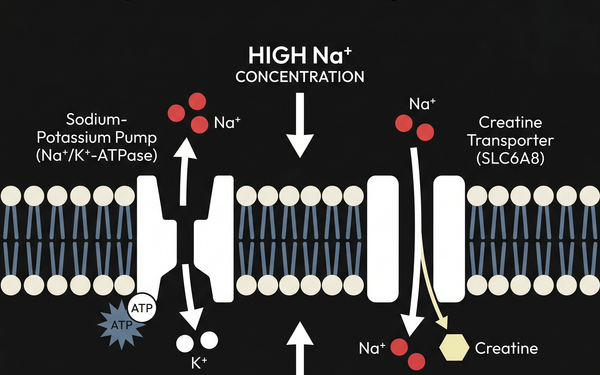
Add creatine to that same glass and you are doubling down on intracellular hydration. Creatine draws water into muscle cells specifically, increasing cell volume in a way that supports both performance and recovery. The sodium helps creatine absorb, because the CreaT1 transporter that moves creatine into cells is sodium dependent, and the creatine helps pull the water you have just retained into the tissues that need it most.
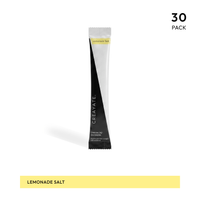
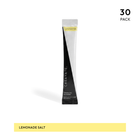
This is exactly why we formulated Creayate the way we did. Not two products, not a complicated morning stack. One sachet with 800mg sodium, 4g creatine monohydrate, potassium, and magnesium, designed specifically for this morning window. The whole process takes about ninety seconds. Tear a sachet, pour it into a glass, fill with cold water, stir. By the time you have finished your first cup of coffee, the electrolytes have already been absorbed.
One more thing worth noting: the effects compound. A single morning of proper rehydration is noticeable. A week of consistent morning electrolyte and creatine intake changes your baseline. You will notice it in how you feel at 10am, clearer, less foggy, less reliant on that second coffee. And it is worth being honest about what you should expect. You are not going to feel a dramatic rush. This is not caffeine. It is not a pre workout. What you will notice is the absence of things: the absence of that 10am fog, the absence of the headache you did not realise you had until it is gone, the absence of that vague, flat feeling that you had been attributing to a bad night's sleep. Proper hydration does not feel like adding something. It feels like removing a drag you did not know was there.
KEY TAKEAWAYS
1. You lose 500 to 700ml of water overnight through breathing and perspiration, meaning you wake up dehydrated every single morning.
2. The cortisol awakening response makes your kidneys flush plain water within the first hour of waking, wasting most of what you drink.
3. Sodium containing fluids are absorbed faster and retained up to 50% longer than plain water, especially on an empty stomach.
4. The morning hydration window, before food and before coffee, is the highest leverage moment of the day for fluid and electrolyte intake.
The bottom line: Your first drink of the day matters more than any other. Make it count.
This article is for informational purposes only and is not a substitute for professional medical advice. Consult your doctor before starting any new supplement regimen.
SOURCES
1. American College of Sports Medicine. Exercise and Fluid Replacement: Position Stand. Medicine and Science in Sports and Exercise. 1996;28(1):i-vii. ACSM
2. Scheer FAJL, Hu K, Evoniuk H, et al. Impact of the human circadian system, exercise, and their interaction on cardiovascular function. Proceedings of the National Academy of Sciences. 2010;107(47):20541-20546. PubMed
3. Rowlands DS, Kopetschny BH, Badenhorst CE. Compositional aspects of beverages designed to promote hydration before, during, and after exercise: concepts revisited. Nutrients. 2024;16(1):1-25. PMC
4. Maughan RJ, Watson P, Cordery PA, et al. A randomized trial to assess the potential of different beverages to affect hydration status: development of a beverage hydration index. American Journal of Clinical Nutrition. 2016;103(3):717-723. PubMed